
 PHAP executive leadership and board members present a plaque of appreciation to Atty. Franklin Anthony Tabaquin, officer in charge of the Food and Drug Administration, in recognition of the agency’s support for PHAP’s 80th anniversary forum, Health for Juan and Juana: Breaking Barriers to Medicine Access.
For many Filipino patients, securing medical treatment involves more than consulting a doctor and obtaining a prescription. It can also mean navigating different government assistance programs, securing financial support, searching for available medicines, and finding ways to sustain treatment over several months.
These challenges underscore the need for a more patient-centered healthcare system that makes medicines and essential treatments easier to access, according to the Pharmaceutical and Healthcare Association of the Philippines (PHAP).
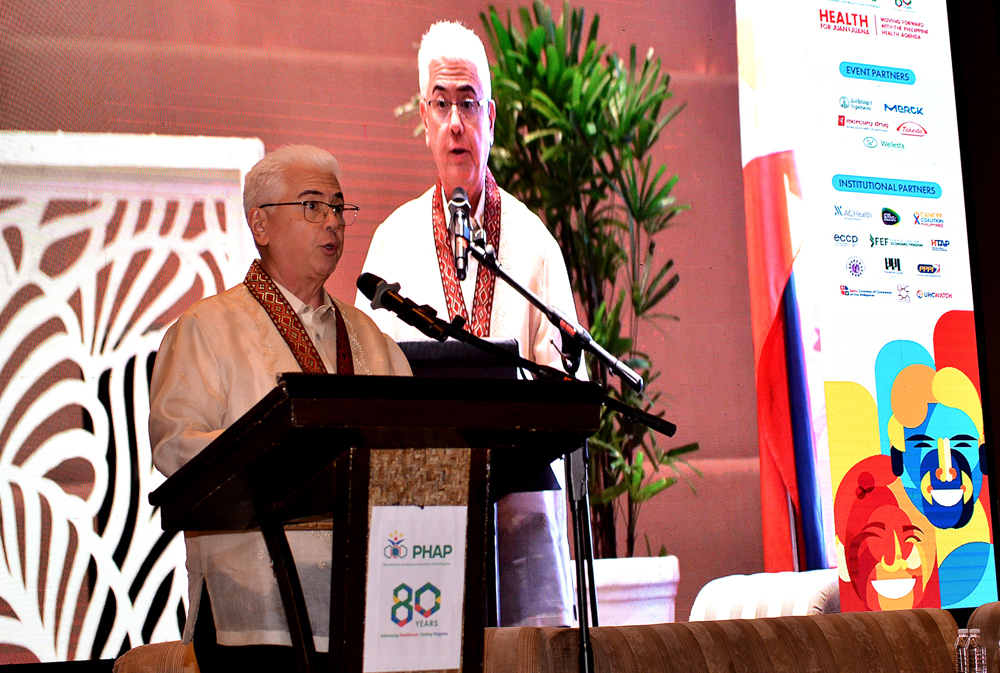
During its 80th anniversary Health for Juan and Juana (HJJ) Forum, themed “Breaking Barriers to Medicine Access: Kalusugang Abot-Kamay nina Juan at Juana,” PHAP joined government leaders, healthcare professionals, patient advocates, and industry representatives in calling for more coordinated healthcare policies that address the realities patients face when seeking treatment.
PHAP President Dr. Diana Edralin emphasized that healthcare access should not be measured solely by the availability of medical innovations or the number of medicines approved for use.
Instead, the healthcare system must consider whether patients can obtain the treatments they need, afford the full course of care, and continue receiving medicines without unnecessary delays.
When treatment becomes a complicated journey
One of the challenges highlighted by Edralin is the difficulty patients encounter when seeking financial assistance for medical treatment.
Patients managing serious illnesses, including cancer, may need to navigate multiple government assistance channels, obtain guarantee letters, or seek support from different institutions to cover their medical expenses.
These processes can become particularly burdensome for patients undergoing recurring treatment, where medicines and other medical services are needed every few weeks or months.
The situation points to a broader concern: healthcare programs may provide financial support, but patients still face difficulties navigating the different requirements and mechanisms needed to obtain treatment.
Edralin raised the importance of examining healthcare policies from the patient’s perspective, particularly whether existing systems are sufficiently responsive to the realities of long-term disease management.
This is especially relevant for cancer patients, whose treatment may involve multiple medicines, diagnostic procedures, and continuing medical supervision.
She cited the expansion of PhilHealth’s breast cancer benefit package from approximately P100,000 to P1.4 million as a significant step toward improving financial protection.
However, she emphasized that treatment packages must also reflect the different types of cancer and the full range of medical interventions patients may require.
For instance, breast cancer has several subtypes that may require different medicines and treatment approaches. A benefit package that does not adequately account for these differences may still leave some patients facing considerable expenses.
Similarly, other cancers, including lung cancer, liver cancer, and lymphoma, require continued attention to ensure that appropriate treatments are included in publicly financed healthcare programs.
For PHAP, improving financial protection means ensuring that health benefits are designed around actual treatment requirements rather than isolated medical procedures or medicines.
Bringing healthcare closer to Filipino communities
Beyond financial assistance, PHAP also identified the physical availability of medicines as another important factor affecting patient access.
Filipinos living in geographically isolated and underserved areas may face additional challenges when pharmacies are limited or healthcare facilities do not have consistent medicine supplies.
Edralin pointed to the need to strengthen medicine distribution through barangay health centers and expand the network of accredited pharmacies participating in government healthcare programs.
Barangay health centers, in particular, can serve as important access points for commonly prescribed medicines, including those used to manage chronic conditions such as hypertension and diabetes.
However, these facilities must have adequate medicine stocks and financing to consistently respond to patients’ needs.
PHAP also highlighted the shortage of pharmacists as a concern that can affect the availability of pharmacy services, particularly in communities with limited healthcare infrastructure.
Edralin discussed efforts to explore more efficient pharmacy service arrangements that could help extend access to underserved areas while maintaining appropriate professional supervision.
Alongside these initiatives, PHAP is seeking closer collaboration with the Department of Health (DOH), PhilHealth, and other stakeholders to improve medicine procurement, distribution, and supply chain planning.
The association also supports expanding the PhilHealth GAMOT Program to include more medicines and strengthening the network of facilities where patients can obtain them.
These efforts are intended to help ensure that healthcare benefits translate into medicines that patients can actually receive in their communities.
Making patient needs central to healthcare reform
At the forum, PHAP reaffirmed its support for the DOH’s Unified National Agenda for Health (UNA Para sa Kalusugan), particularly initiatives aimed at improving primary care, expanding health benefits, and strengthening healthcare delivery.
PHAP Executive Director Teodoro Padilla emphasized that improving access requires addressing the systems that connect medical innovation with patient care.
“Building sustainable access means looking beyond the medicine itself. We also have to strengthen the pathways, financing and systems that allow innovations to reach patients efficiently and consistently,” Padilla said.
For Edralin, an equally important consideration is ensuring that healthcare commitments are translated into concrete action within reasonable timelines.
She stressed that discussions on expanding medicine coverage, improving regulatory processes, and strengthening financing mechanisms must be accompanied by clear implementation commitments and follow-through.
Delays in healthcare reform can have immediate consequences for patients who are already dealing with serious illnesses and the financial demands of continuing treatment.
The Health for Juan and Juana Forum, first convened in 2016, provides a platform for government agencies, healthcare professionals, patient organizations, and the private sector to identify priorities and advance collaborative solutions.
As PHAP marks 80 years of representing the research-based pharmaceutical sector in the Philippines, the organization is placing renewed emphasis on making healthcare policies more responsive to the needs of Filipino patients.
Ultimately, PHAP’s call is for a healthcare system where patients spend less time navigating barriers and more time receiving the care and treatment they need.
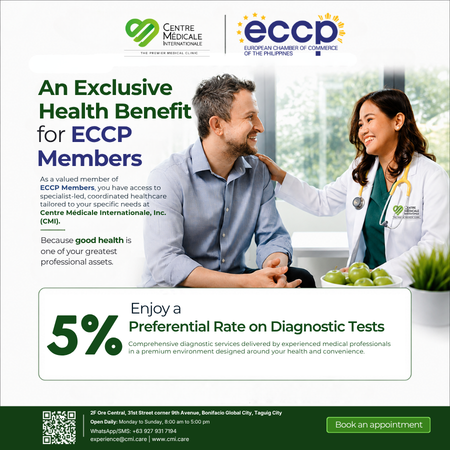


Serving the European-Philippine business community since 1978, the ECCP remains committed to enabling cross-sector collaboration, promoting economic growth, and championing a sustainable future. For inquiries or further information, you may contact us directly or connect with us through our official social media channels.