
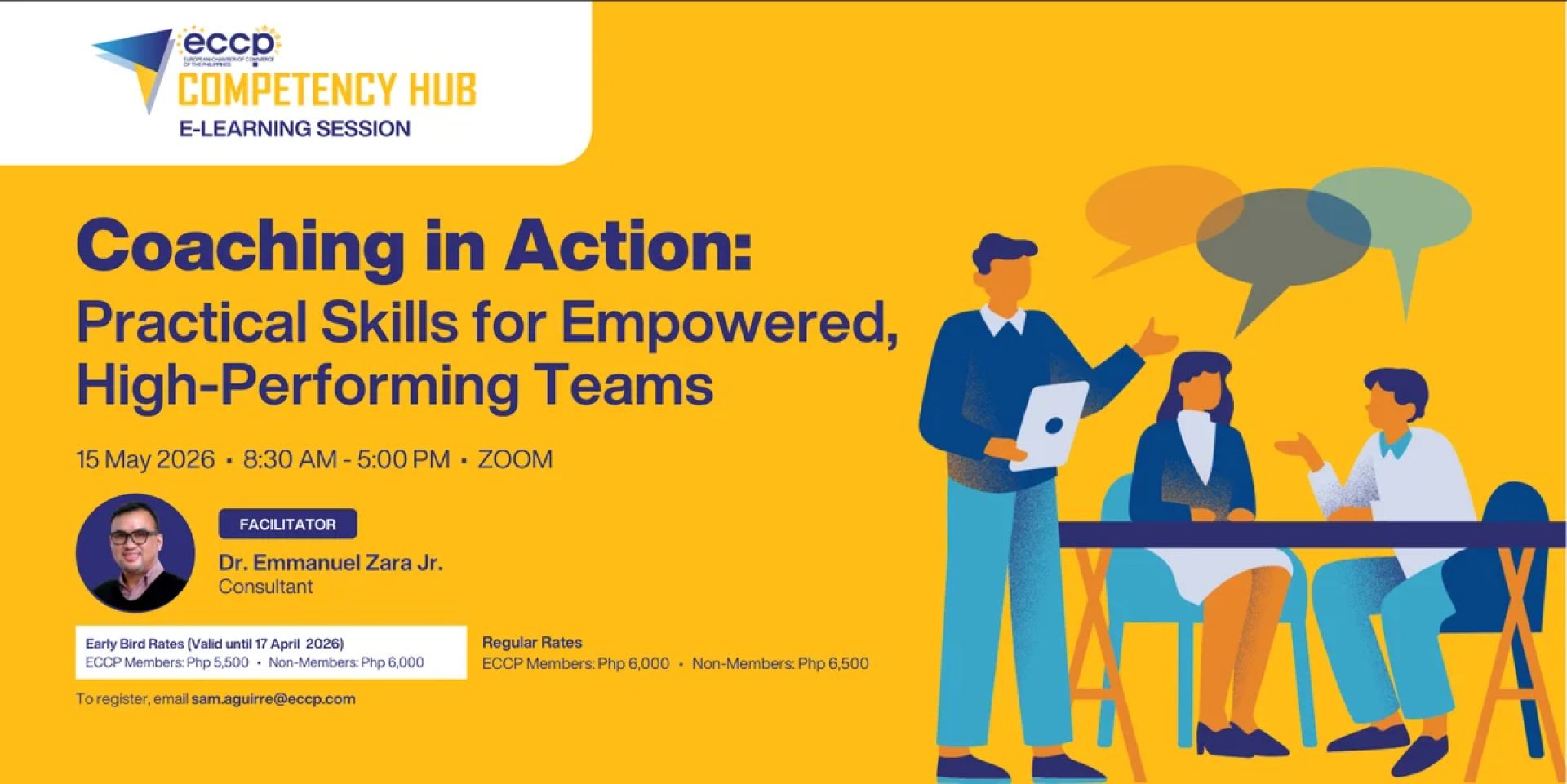
Coaching in Action: Practical Skills for Empowered, High-Performing Teams
Build coaching capability to unlock team performance and create a culture of empowerment!
Program Overview
This highly practical program equips leaders with coaching skills to support empowered teams, drive performance, and reinforce a coaching culture in their organizations. Designed with real workplace dynamics in mind, it is ideal for leaders navigating both strategic and operational complexity.
Unlike traditional leadership training, this workshop moves quickly from concept to practice with live coaching demonstrations, facilitated role-plays, and immediate application using participants' real scenarios.
Who Should Attend
• People managers and team leaders at all levels
• Senior specialists or individual contributors transitioning into leadership roles
• HR, L&D, and OD practitioners supporting coaching capability development
Learning Outcomes
By the end of this one-day program, participants will be able to:
• Reframe coaching as an everyday leadership practice, not just an HR function
• Build trust and psychological safety to enable open, developmental conversations
• Apply foundational coaching behaviors: deep listening, powerful questions, and balancing empathy with accountability
• Use the GROW framework to structure focused coaching conversations in one-on-ones and team huddles
• Recognize when to coach and when to give direction or feedback, based on readiness and context
• Integrate coaching into performance conversations to reinforce clarity, accountability, and growth
• Create a personal action plan to make coaching a leadership habit
Session Outline
Module 1 – Lead Like a Coach
Objective: Reframe coaching as an everyday leadership practice.
Key Topics:
• Coaching vs mentoring vs managing: practical distinctions
• Why coaching matters in today's evolving work culture
• Evidence-based benefits of coaching (performance, retention, psychological safety)
Learning Activities:
• Short input and reflection
• Pair discussion: "Where am I coaching vs managing?"
Module 2 – Trust as the Operating System
Objective: Establish trust and psychological safety to enable meaningful coaching conversations.
Key Topics:
• Trust-building techniques in hierarchical and cross-functional teams
• Coaching as co-creation: shifting from "fixer" to "facilitator"
• Navigating resistance, ego, and defensiveness
Learning Activities:
• Case scenario analysis
• Small-group sharing on psychological safety wins and misses
Module 3 – Conversations That Stick
Objective: Apply foundational coaching behaviors in everyday leadership conversations.
Key Topics:
• Deep listening: empathy and judgment-free presence
• Powerful questions that unlock insight and ownership; anatomy of a powerful question
• Knowing when to ask vs when to advise
• Facilitating ownership: helping employees find their own answers
• Balancing empathy with accountability
Learning Activities:
• Question re-framing exercises
• Triad practice (coach–coachee–observer)
Module 4 – Coaching Framework: GROW in Action
Objective: Use structured models to guide focused, practical coaching conversations.
Key Topics:
• The GROW Model (Goal → Reality → Options → Way forward)
• Adapting GROW for operational and leadership alignment
• Using GROW in regular check-ins and team huddles
Learning Activities:
• Demo coaching conversation using GROW
• Practice rounds using participants' real situations
Module 5 – Right Move, Right Moment
Objective: Recognize the right timing, mindset, and conditions for coaching.
Key Topics:
• Signs of readiness in employees and leaders
• Dealing with defensiveness or resistance
• Coaching the "uncoachable": practical strategies
Learning Activities:
• Scenario sorting: "Coach, Direct, or Escalate?"
• Plenary debrief on judgment calls
Module 6 – Performance, Not Paperwork
Objective: Use coaching as a tool to reinforce clarity, accountability, and growth.
Key Topics:
• Setting performance objectives with a coaching lens
• Addressing shortfalls and success in a way that supports improvement
• Coaching for performance vs coaching for people development
• When to coach vs when to give feedback
Learning Activities:
• Role-play of a performance conversation
• Group reflection: "What shifts when I use a coaching lens?"
Module 7 – Make Coaching a Habit
Objective: Move from concept to confidence through real-world practice and reflection.
Key Topics:
• Translating workshop insights into day-to-day habits
• Integrating coaching into existing meetings and workflows
Learning Activities:
• Guided role-play using live participant cases
• Peer coaching with facilitated feedback
• Personal action planning: "My next three coaching moves"
Delivery Mode: Interactive and highly participative via Zoom, using breakout rooms, live coaching demonstrations, case work, peer practice, and facilitated reflection
Materials Provided: Digital participant workbook, coaching conversation guides, GROW
framework toolkit, action planning template
- Invoices will be sent to the registered email address.
- Full payment is required prior to or at least 48 hours before the session. Unpaid attendees will not be be able to receive the unique link to the webinar. Please send proof of payment to trainings@eccp.com and accounting@eccp.com
- No shows and late cancellations will be billed at full cost. Cancellations should be made at least 48 hours or two working days before the event. Replacement is encouraged.
- The ECCP reserves the right to reschedule or cancel this training program. Final confirmation of program date is advised at least two (2) working days before the program start date.
For registration inquiries, please contact Sam Aguirre at sam.aguirre@eccp.com.